The Sable Peninsula
In the long periods between seeing natural wonders, the life-experience sometimes runs the risk of becoming boorish. Routine sets in. Deadlines are met. Chores performed. Too much time in the mundane world can be ruinous. This morning was the end of one such period, and I had just sent out a couple work emails and logged off for a 3-day weekend. I microwaved a bowl of oatmeal in the foyer and sat down in the communal area of the bargain inn. These kinds of places are the meeting grounds of life’s interesting characters. A big guy sat alone at the next table over, talking loudly on his phone as he called different people to tell them about his trip to Alaska. Normally I’d be annoyed, but his energy was contagious and I listened raptly. He works in a store in the Lower 48 and this was the trip of a lifetime for him. In his excited chatter his words would reach a staccato, and I’d look up from my oatmeal at him and see a man that looked like a little boy again, middle-aged yet eyes full of wonder. His appearance was ideal in my life. His excited chatter and contagious energy had me amped up as I finished the oatmeal and went to excitedly gather my things up and go meet this world he spoke of.
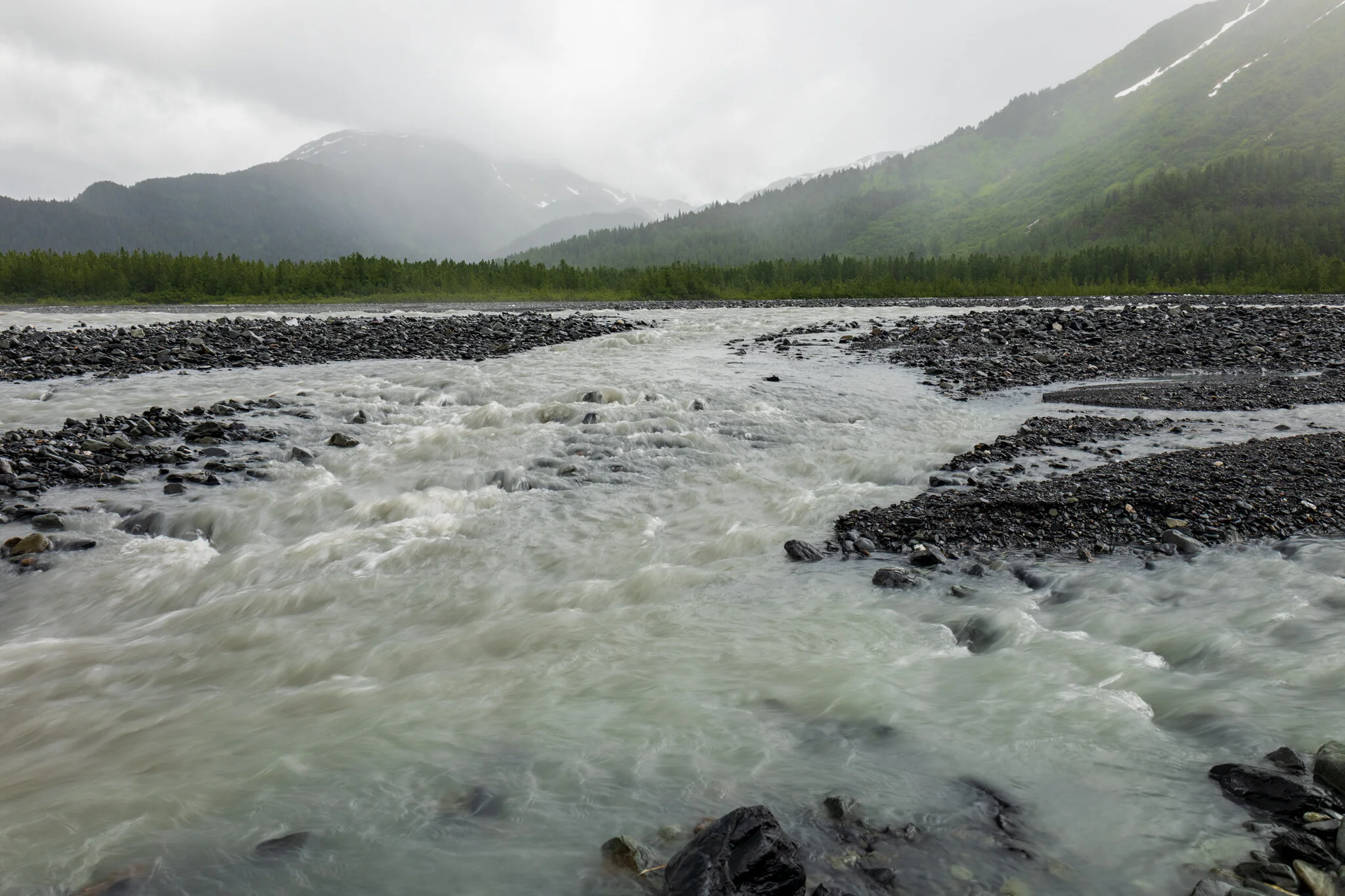
I left the inn and went south down to the peninsula. I didn’t have a destination in mind, but when I saw the sign for Exit Glacier I took it - I had been reading about it the prior night and my excitement was refreshed at the thought of seeing it outside of a magazine spread. When reaching the valley it slowly dawns on one that this place is different. It’s not a sudden epiphany of a “eureka!” moment, but a creeping realization. After parking and leaving the lot I stepped onto a trail of sable rock, making my way along it as it rained and and off. There wasn’t a single point of definition in the overcast sky. The light was what would normally be considered a photographer’s nightmare that at the very best, makes for a black-and-white-pictures kind of day. But here, the jet black ground can’t be muted by indifferent clouds. It looked like a recent cataclysm had scorched the land, yet everything was as vibrant as I had ever seen anything be. And then I saw the glacial mass creeping down from wintry summits into the valley of the living. This place is indeed worthy of the elite national park status.
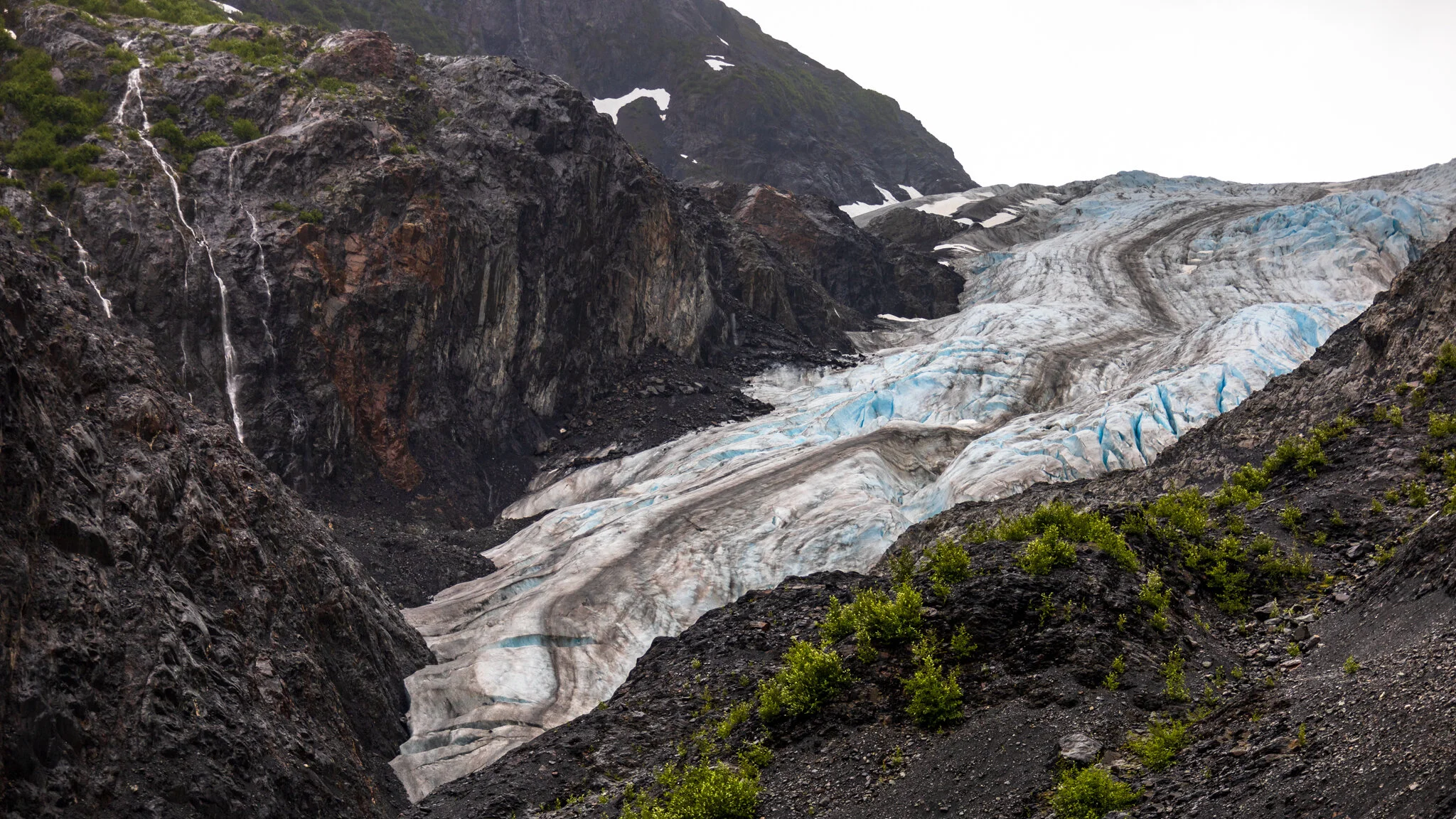
And it feels like my home of the Tanana Valley, which lies hundreds of miles north in rolling hills. The two biomes look vastly different, save for one familiar element here: glaciers like these on the coast of British Columbia feed the Tanana River Valley. The path the meltwater takes from those glaciers is astonishing - they start from just a few miles from the ocean (which is the end-objective of any descending meltwater), but instead of heading that way, they travel thousands of miles north and then west though a continent. Along the journey countless tributaries of rivers/streams/creeks/sloughs feed it, and all along the way the pale ghostly hue still stains it - the result of just a few of these glaciers carrying glacial silt with them.